Keeping the Line Running: A Maintenance Manager's Guide to Cable Gland Upgrades on Live Equipment

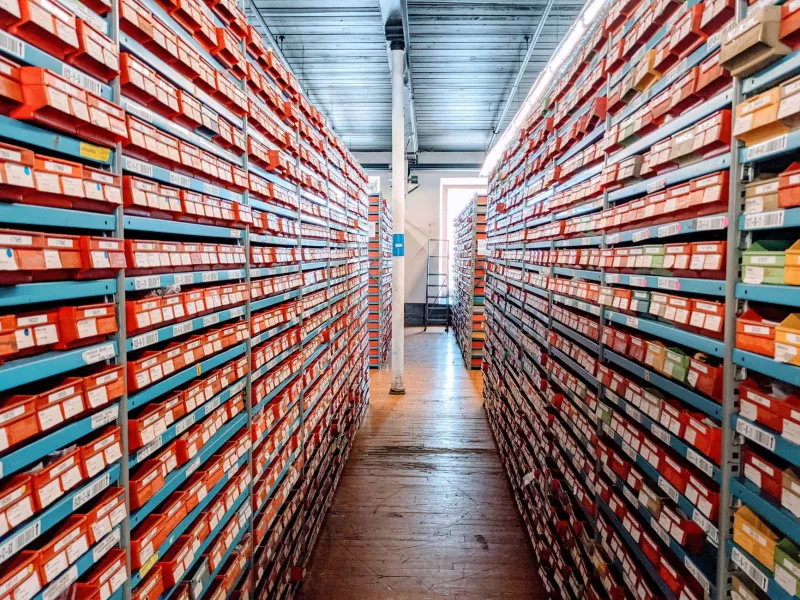
Photo by Photo by Cemrecan Yurtman on Unsplash on Unsplash
There is a particular kind of pressure that settles over a maintenance manager when the equipment is aging visibly, the cable glands are corroding at the threads, and the production schedule shows no gap large enough to do the job properly. This scenario plays out in manufacturing facilities across the United States every week — in automotive stamping plants, chemical processing facilities, food packaging operations, and paper mills where the capital equipment may be decades old but the production targets are entirely current.
The retrofit challenge is not simply a technical one. It is a planning and coordination problem as much as an engineering problem, and the maintenance professionals who handle it best tend to approach it with the same structured discipline they would apply to a full scheduled shutdown — even when no shutdown is available to them.
Why Aging Gland Infrastructure Becomes a Crisis
Cable glands are not components that manufacturing organizations typically track on a replacement schedule. Unlike bearings or seals on rotating equipment, they do not generate vibration signatures or temperature anomalies that predictive maintenance systems can detect. They fail gradually and then suddenly — a corroded thread here, a cracked sealing insert there, a gland body that has lost its IP rating integrity without announcing the fact.
The consequences of that silent degradation include moisture intrusion into control enclosures, accelerated corrosion of terminal blocks and wire ends, increased risk of ground faults, and the eventual unplanned failure that forces the emergency shutdown everyone was trying to avoid. In older facilities, the situation is compounded by the loss of original specifications. Equipment installed in the 1980s or 1990s may carry glands whose manufacturer no longer exists, whose part numbers are unresolvable, and whose material composition is unknown without physical testing.
Understanding this trajectory is the first step toward addressing it proactively rather than reactively.
The Assessment Phase: Know What You Have Before You Touch Anything
Before any retrofit work begins, a thorough physical assessment of the existing installation is non-negotiable. This means documenting every gland on the target equipment — its approximate size, thread type, material (as best as can be determined), cable diameter, and current condition. Photography is invaluable here. A systematic photographic record created before any work begins serves as both a reference during the project and a baseline for future maintenance.
Thread identification deserves particular attention in retrofit contexts. American manufacturing facilities frequently encounter a mix of metric (M-series), PG (Panzergewinde), and NPT threads on equipment assembled from components sourced across multiple countries and eras. Misidentifying a PG13.5 thread as an M20 thread — a common confusion given their similar dimensions — leads to cross-threading, compromised seals, and potentially damaged enclosure knockouts that are far more expensive to repair than the gland itself.
Thread gauges and calipers should be standard tools in any retrofit assessment kit. When thread identification remains ambiguous, thread plug gauges specific to each suspected type provide definitive answers. The time invested in this step consistently pays for itself by preventing installation errors during the actual retrofit.
Planning for Partial Shutdowns and Micro-Windows
Few production environments are truly continuous without any opportunity for brief interruptions. Shift changes, scheduled lubrication stops, die changes, and product changeovers often create windows of five to thirty minutes that, with careful planning, can be used for individual gland replacements on non-critical circuits.
The key is preparation. A gland replacement that takes forty-five minutes when tools, replacement components, and documentation are being gathered during the window can be compressed to eight to twelve minutes when all materials are staged in advance and the technician has rehearsed the sequence on a similar gland in a non-critical location. Maintenance teams that develop and practice these compressed procedures consistently outperform those that approach each micro-window as an improvisation.
For glands serving critical circuits that cannot be interrupted even briefly, the planning conversation needs to involve both production scheduling and electrical safety personnel. In many cases, a partial de-energization of a specific circuit — not a full equipment shutdown — can be arranged during a product changeover without impacting overall output. These partial isolations require proper lockout/tagout procedures regardless of their brevity, and that procedural rigor should be treated as fixed rather than negotiable under production pressure.
Modular and Split-Entry Solutions for Live Replacement
The cable gland industry has responded to the retrofit challenge with product designs specifically engineered for situations where pulling cable is impractical or impossible. Split-entry cable glands, which divide along a longitudinal axis and reassemble around an existing cable, allow a gland to be replaced without disturbing the cable termination inside the enclosure or threading the cable through the new gland body.
These solutions carry a higher unit cost than standard glands, and their sealing performance — while adequate for many applications — may not match the integrity of a properly installed one-piece gland. They are best understood as purpose-built retrofit tools rather than general-purpose components. Specifying them across an entire installation to save labor time is not sound engineering; deploying them selectively where live replacement is genuinely necessary is.
Modular enclosure systems offer a related approach at a larger scale. When the enclosure itself is aging alongside its gland plate, modular designs allow the gland plate to be fabricated, populated, and tested offline before being swapped into service during a brief planned interruption. This technique shifts the labor-intensive portion of the work — drilling, threading, installing, and testing — away from the production environment entirely, reducing the actual interruption window to the time required for a single plate exchange.
Navigating Lost Specifications
The absence of original documentation is among the most frustrating conditions a retrofit team can encounter, and it is common enough in facilities with equipment predating digital records that it should be treated as an expected condition rather than an exceptional one.
When original specifications are unavailable, the assessment data collected during the survey phase becomes the specification baseline. Cable outer diameter measurements drive gland size selection. Thread identification drives gland entry configuration. The operating environment — temperature range, exposure to chemicals or moisture, presence of hazardous atmospheres — drives material and certification requirements.
In hazardous locations, the absence of original specifications introduces additional complexity. Replacing a gland in a Class I, Division 1 area without documentation of the original certified assembly requires coordination with the facility's electrical engineer and, in some cases, consultation with the authority having jurisdiction (AHJ). Proceeding without that coordination is not a shortcut — it is a compliance and safety liability that can have consequences well beyond the cost of a retrofit project.
For facilities with large volumes of undocumented legacy glands, engaging a qualified electrical contractor or cable gland specialist to conduct a formal compliance assessment before retrofit work begins is a sound investment. The assessment creates a documented baseline that serves the facility for years beyond the immediate project.
Documentation as a Deliverable
Every retrofit project, regardless of scale, should produce updated documentation as a formal deliverable — not an afterthought. This means recording the replacement gland specifications, installation date, and technician for every gland replaced, and tying that record to the equipment asset in the facility's maintenance management system.
This discipline transforms a one-time retrofit into a foundation for ongoing maintenance management. Future technicians will know what is installed, where to source replacements, and when the work was last performed. The facility builds institutional knowledge rather than perpetuating the undocumented conditions that made the retrofit necessary in the first place.
The retrofit challenge is real, and it is not going away as American manufacturing infrastructure continues to age. But it is a solvable problem — one that rewards structured planning, proper tooling, and a commitment to documentation that outlasts any individual project.