When Your Supplier Goes Dark: Building a Resilient Industrial Gland Procurement Strategy
It rarely announces itself. One week your usual distributor rep is quoting standard lead times; the next, you receive a brief email advising that the M25 stainless glands your maintenance team relies on are on backorder — estimated availability unknown. You check your secondary source. Same story. You search the part number online and find a handful of unfamiliar vendors with uncertain quality credentials and shipping addresses that raise questions you don't have time to investigate properly.
This is not a hypothetical. It is a situation that has played out across American manufacturing operations with increasing frequency over the past several years. The reasons are structural, and they are not going away.
The Structural Problem With How We Buy Glands
Cable glands occupy an awkward position in the procurement hierarchy. They are not glamorous capital equipment. They rarely appear on engineering leadership's radar until something fails. In the context of a bill of materials that might include complex drives, precision sensors, and custom fabricated components, a bag of threaded fittings can seem almost trivial — the kind of item you order when you need it and expect to arrive within a week.
That assumption held reasonably well during periods of stable global manufacturing and predictable logistics. It has proven fragile under conditions that have become, by any honest assessment, the new normal: container shortages, raw material price volatility, factory shutdowns in key manufacturing regions, and the ongoing consolidation of industrial distribution networks in the United States.
The domestic distributor landscape for specialized cable glands has contracted meaningfully over the past decade. Regional electrical supply houses that once maintained deep inventory across a broad range of gland specifications have been acquired, restructured, or have shifted toward higher-margin product categories. What remains is frequently a thinner distribution layer with less buffer inventory and greater dependence on direct import from overseas manufacturers — a supply chain configuration that transfers risk directly to the end customer.
Why Glands Are Harder to Substitute Than They Appear
One response to supply disruption is substitution: if the specified part is unavailable, find something equivalent. For cable glands, this approach is more complicated than it appears and more consequential when it goes wrong.
A gland's specification is rarely defined by a single dimension. Thread form, thread size, material grade, sealing range, IP rating, certification status, clamping mechanism design, and temperature rating all factor into whether a given fitting is appropriate for a given application. In hazardous location installations — a significant portion of industrial gland usage in the petrochemical, mining, and grain handling sectors — substituting an uncertified or differently rated gland is not merely a quality compromise; it is a compliance and safety violation.
Even in non-hazardous applications, a seemingly close substitute may have a sealing range that doesn't accommodate the actual cable diameter on hand, or a clamping design that provides inadequate strain relief for the installation geometry. The time pressure of a production-critical repair makes thorough evaluation difficult, and the consequences of an improper substitution may not become apparent for weeks or months.
This is why the resilience strategy cannot rely primarily on substitution. It must begin upstream, before the emergency.
Knowing Your Critical Specifications Before You Need Them
The foundational step in supply chain resilience for cable glands is deceptively straightforward: know exactly what you have installed and why. Many facilities cannot answer this question with confidence. Glands have been specified by different engineers over different project phases, sourced from multiple suppliers, and documented inconsistently — or not at all.
A gland audit — systematically cataloging the thread forms, sizes, materials, sealing ranges, and certifications of every gland type in active use — creates the information base that makes everything else possible. It allows procurement teams to identify which specifications are truly unique or difficult to source, and which can be consolidated to reduce SKU complexity. It enables meaningful conversations with suppliers about stocking programs. And it provides the engineering foundation for evaluating alternatives with confidence rather than guesswork.
This audit need not be a massive undertaking. Beginning with the highest-criticality systems — those where a gland failure would cause an immediate production stoppage or safety incident — and working outward from there allows a facility to capture most of the practical risk reduction in a manageable initial effort.
The Inventory Question: Carrying Cost vs. Exposure Cost
The just-in-time philosophy that has dominated American manufacturing procurement for decades has genuine merits in high-volume, high-predictability contexts. Cable glands are not that context. The carrying cost of maintaining a modest strategic inventory of critical gland specifications is, in most cases, trivially small relative to the cost of a single unplanned production stoppage.
Consider the arithmetic: a one-day production halt on a moderately productive assembly line might cost $50,000 to $200,000 in lost throughput, labor, and recovery expense. A six-month buffer stock of the gland types most critical to that line might represent a few thousand dollars in inventory value. The expected value calculation is not subtle.
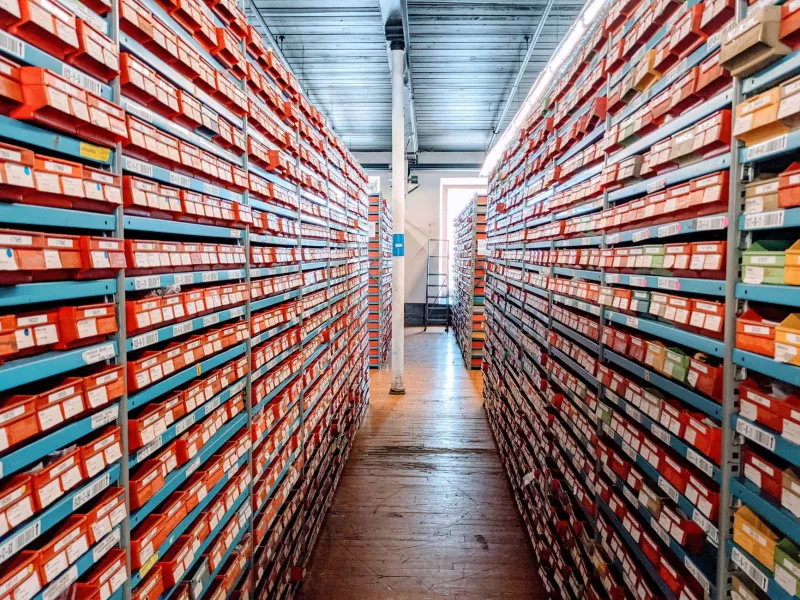
The practical challenge is identifying which specifications warrant buffer stocking and at what quantity. This is where the audit described above pays its first dividend. Facilities that understand their gland population can make rational stocking decisions rather than either over-buying across the board or carrying nothing and hoping for the best.
Diversifying the Supplier Relationship
Procurement resilience also requires attention to the supplier relationship itself. Dependence on a single distributor for specialized components creates a vulnerability that is independent of that distributor's performance — their supply chain can fail even when their service does not.
Maintaining active relationships with at least two qualified suppliers for each critical specification — and by "active" meaning regular orders, not just approved vendor list entries — provides meaningful optionality when disruption occurs. It also maintains the commercial relationships and institutional knowledge that allow rapid escalation when needed.
For facilities with the volume to support it, direct relationships with gland manufacturers — bypassing the distribution layer for the most critical specifications — provide the greatest supply visibility and the earliest warning when production constraints emerge.
Resilience Is a Specification Decision
Ultimately, supply chain resilience for industrial cable glands begins at the specification stage. Engineering teams that understand which gland characteristics are mission-critical and which are flexible, and that design installations with sourcing realities in mind, give their procurement counterparts significantly more room to maneuver when supply conditions tighten.
At VelxCa BelGland, we work with procurement and engineering teams across the country to build exactly this kind of specification clarity. The facilities that weather supply disruptions most effectively are not those that react fastest — they are those that prepared before the disruption arrived.