VelxCa BelGland Industrial Cable & Gland Solutions for Professionals

VelxCa BelGland

Industrial Cable & Gland Solutions for Professionals

Latest Articles

Bigger Is Not Better: The Pervasive Oversizing Problem Undermining Cable Gland Performance Across US Facilities
Industry Insight

Bigger Is Not Better: The Pervasive Oversizing Problem Undermining Cable Gland Performance Across US Facilities

A widespread but rarely discussed practice of installing cable glands one size larger than specifications require is quietly compromising sealing performance, inflating material costs, and introducing installation errors across US industrial facilities. This analysis challenges the conventional safety-margin logic that drives oversizing, presents the technical case for precision selection, and offers a structured audit framework for correcting existing installations.
The Quiet Crisis in Your Supply Chain: How Industrial Cable Gland Lead Times Are Set to Derail US Production Schedules
Industry Insight

The Quiet Crisis in Your Supply Chain: How Industrial Cable Gland Lead Times Are Set to Derail US Production Schedules

Supply chain vulnerabilities specific to industrial cable glands are building beneath the surface of the US manufacturing sector, largely unnoticed until a production stoppage makes them impossible to ignore. From geopolitical disruptions to domestic distributor capacity limits, the pressure points are multiplying. This article examines the structural causes and offers plant managers a concrete framework for staying ahead of the next shortage.

When 'Close Enough' Fails: Dissecting the Real Consequences of Unauthorized Cable Gland Substitutions
Technical Reference

When 'Close Enough' Fails: Dissecting the Real Consequences of Unauthorized Cable Gland Substitutions

Substituting a cable gland with what appears to be a functionally equivalent alternative is one of the most common — and most consequential — errors in industrial maintenance practice. This article examines documented failure scenarios, breaks down the technical incompatibilities that cause them, and outlines a rigorous approval process that prevents unauthorized swaps from reaching the plant floor.

Dead Stock, Live Losses: How Poor Cable Gland Inventory Practices Are Draining Your Facility's Budget
Industry Insight

Dead Stock, Live Losses: How Poor Cable Gland Inventory Practices Are Draining Your Facility's Budget

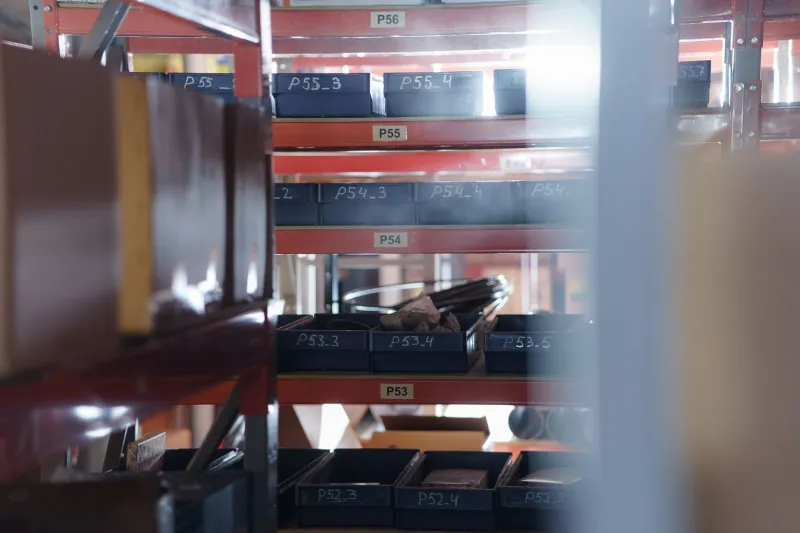
Across American manufacturing facilities, disorganized cable gland inventory systems quietly erode procurement budgets through duplicate purchasing, premature disposal, and cataloging blind spots. This article examines the root causes of inventory mismanagement and delivers a structured audit framework to help plant managers recover hidden capital and tighten procurement workflows.

Still Running, Already Dead: The Silent Liability of Obsolete Cable Glands in Active Facilities
Industry Insight

Still Running, Already Dead: The Silent Liability of Obsolete Cable Glands in Active Facilities

Across American manufacturing plants, cable glands installed years or even decades ago continue operating past their effective service life—often without anyone noticing until compliance audits or equipment failures force the issue. Discontinued models, superseded standards, and unavailable replacement parts create a compounding risk profile that can expose facilities to regulatory penalties, unplanned downtime, and serious safety incidents. Understanding how to identify, catalog, and retire the

Vanishing Expertise: How the Disappearing Cable Gland Knowledge Base Is Putting American Plants at Risk
Industry Insight

Vanishing Expertise: How the Disappearing Cable Gland Knowledge Base Is Putting American Plants at Risk

Across American manufacturing facilities, the engineers and technicians who once held deep institutional knowledge of cable gland selection, installation, and diagnostics are retiring faster than that expertise can be transferred. The resulting skills gap is quietly reshaping how plants fail—and who gets blamed when they do. This article examines the structural dimensions of that gap and offers plant managers a practical framework for closing it before the next equipment failure exposes it.

Slow Burn: How Temperature Cycling Silently Compromises Cable Gland Seals in Industrial Facilities
Technical Reference

Slow Burn: How Temperature Cycling Silently Compromises Cable Gland Seals in Industrial Facilities

Repeated thermal expansion and contraction exerts cumulative mechanical stress on cable gland seals that rarely announces itself until a failure is already well underway. Understanding the physics behind thermal creep—and recognizing its early field indicators—is essential for any facility operating in thermally demanding environments. This article examines the mechanisms at work and the material and installation strategies that prevent silent seal degradation from becoming a safety incident.

Stockpiled and Stranded: Why a Full Shelf of Cable Glands Is No Guarantee of Operational Security
Industry Insight

Stockpiled and Stranded: Why a Full Shelf of Cable Glands Is No Guarantee of Operational Security

Across American manufacturing facilities, bulk cable gland inventories are often treated as a hedge against supply chain disruption — but the reality is far more complicated. Obsolescence, material degradation, and specification drift can quietly transform a stockroom asset into a liability. This article examines why quantity alone is not a procurement strategy.

Closing the Loop: What Plant Managers Get Wrong About Cable Gland Decommissioning
Industry Insight

Closing the Loop: What Plant Managers Get Wrong About Cable Gland Decommissioning

When a facility shuts down or major equipment reaches end of life, cable glands rarely make the priority list—yet improper removal and disposal can expose organizations to significant environmental and legal liability. This article examines the regulatory landscape, material recovery opportunities, and field-tested procedures that transform decommissioning from an afterthought into a disciplined operational process.

Below the Surface: A Systematic Approach to Auditing Cable Gland Integrity in Underground and Subterranean Electrical Installations
Technical Reference

Below the Surface: A Systematic Approach to Auditing Cable Gland Integrity in Underground and Subterranean Electrical Installations

Underground and buried electrical runs represent one of the most consistently overlooked areas in industrial facility maintenance programs. Moisture infiltration, soil-driven corrosion, and hydrostatic pressure combine to silently compromise cable gland integrity long before any surface-level symptom becomes visible. This guide provides a structured framework for assessing below-grade installations, recognizing early failure indicators, and establishing a preventive replacement schedule before o

Rethinking Redundancy: Why Most US Facilities Are One Disruption Away From a Cable Gland Crisis
Industry Insight

Rethinking Redundancy: Why Most US Facilities Are One Disruption Away From a Cable Gland Crisis

Many US industrial facilities believe a two-supplier procurement model provides adequate protection against supply chain disruption — but the evidence increasingly suggests otherwise. From tariff volatility to concentrated manufacturing geographies, the structural vulnerabilities in cable gland sourcing run deeper than most procurement teams acknowledge. This article presents a practical framework for building genuine supplier redundancy without inflating inventory costs or warehouse overhead.

Bridging the Gap: A Maintenance Engineer's Playbook for Retrofitting Cable Glands Into Legacy Industrial Equipment
Technical Reference

Bridging the Gap: A Maintenance Engineer's Playbook for Retrofitting Cable Glands Into Legacy Industrial Equipment

Older industrial equipment presents a unique and often underestimated challenge when facilities attempt to bring their cable management up to modern standards. From obsolete thread forms to undersized enclosure knockouts, the compatibility gap between legacy hardware and contemporary cable glands demands a structured, methodical approach. This guide walks maintenance engineers through the assessment, decision-making, and execution phases of a successful retrofit without shutting down production.

Don't Wait for the Inspector: How to Run a Cable Gland Compliance Audit Before OSHA Does It for You
Industry Insight

Don't Wait for the Inspector: How to Run a Cable Gland Compliance Audit Before OSHA Does It for You

OSHA inspections rarely arrive with advance notice, and cable gland violations consistently appear among the findings that result in citations, production stoppages, and costly corrective mandates. This guide walks maintenance teams through a structured, facility-wide compliance audit designed to identify risk areas, document deficiencies, and establish corrective actions long before a federal inspector sets foot on the plant floor.

Paper Trails and Plant Safety: Why Cable Gland Documentation Is Your Facility's First Line of Defense
Industry Insight

Paper Trails and Plant Safety: Why Cable Gland Documentation Is Your Facility's First Line of Defense

Across American manufacturing plants, cable gland failures are routinely blamed on material degradation or improper installation—yet the underlying cause is often far more mundane: no one wrote anything down. Poor documentation practices surrounding cable gland specifications, maintenance history, and compliance records quietly compound operational risk until an inspection, incident, or unplanned outage forces the issue into the open.

When the Lab Rating Meets the Plant Floor: Understanding IP Code Failures in Dusty, Contaminated Industrial Environments
Technical Reference

When the Lab Rating Meets the Plant Floor: Understanding IP Code Failures in Dusty, Contaminated Industrial Environments

An IP65 or IP67 rating stamped on a cable gland datasheet offers a reassuring promise — but that promise was made in a controlled laboratory, not on your production floor. This article examines the structural gap between standardized ingress protection testing and real-world performance in environments saturated with fine particulates, coolant mist, and abrasive debris. Maintenance engineers and plant managers who rely solely on IP codes without understanding their limitations are accepting risk

Heat, Density, and Failure: Selecting Cable Glands for High-Power Electrical Environments
Technical Reference

Heat, Density, and Failure: Selecting Cable Glands for High-Power Electrical Environments

In high-density data centers and industrial control rooms, improper cable gland selection can quietly set the stage for thermal runaway, insulation failure, and unplanned downtime. This technical reference examines the thermal dynamics at work in mission-critical electrical installations and provides a structured framework for specifying glands that perform safely under sustained heat load.

Navigating the End-of-Life Cycle: A Plant Manager's Guide to Cable Gland Standard Transitions
Industry Insight

Navigating the End-of-Life Cycle: A Plant Manager's Guide to Cable Gland Standard Transitions

As industrial component manufacturers consolidate product lines and phase out legacy specifications, plant managers are increasingly confronted with the challenge of sourcing cable glands for equipment that was built to standards no longer actively supported. This guide offers a structured approach to identifying at-risk installations, evaluating modern equivalents, and managing the transition in a way that preserves compliance and supports future maintenance teams.

The Invisible Threat: How Mechanical Vibration Destroys Cable Gland Integrity in High-Speed Production Environments
Industry Insight

The Invisible Threat: How Mechanical Vibration Destroys Cable Gland Integrity in High-Speed Production Environments

In automotive plants, metalworking facilities, and high-speed packaging lines across the US, mechanical vibration silently degrades cable gland seals and strain relief elements long before any visible sign of failure appears. Understanding the mechanisms behind vibration-induced degradation—and selecting glands engineered to resist them—can mean the difference between a reliable production line and recurring, costly unplanned downtime. This article examines the diagnostic indicators, relevant pe

Aging Infrastructure, Modern Demands: Conducting a Cable Gland Compatibility Audit on Legacy Industrial Equipment
Technical Reference

Aging Infrastructure, Modern Demands: Conducting a Cable Gland Compatibility Audit on Legacy Industrial Equipment

Older manufacturing facilities across the United States are running equipment designed under cable gland standards that no longer align with current safety codes or modern connectivity requirements. Without a structured compatibility audit, maintenance teams risk compounding failures, code violations, and unplanned downtime. This guide walks through identifying gaps between legacy and contemporary gland systems—and executing phased upgrades without halting production.

The Hidden Cost of Mismatched Glands: A Practical Sizing Guide for Industrial Maintenance Teams
Technical Reference

The Hidden Cost of Mismatched Glands: A Practical Sizing Guide for Industrial Maintenance Teams

Incorrect cable gland sizing is one of the most preventable—yet persistently common—sources of installation failure in American manufacturing plants. From seal degradation to outright connector rejection, the downstream consequences of a poor fit can be measured in thousands of dollars of unplanned downtime. This guide walks maintenance teams through the critical sizing parameters, common mistakes, and a field-ready checklist for getting it right the first time.