Slow Burn: How Temperature Cycling Silently Compromises Cable Gland Seals in Industrial Facilities
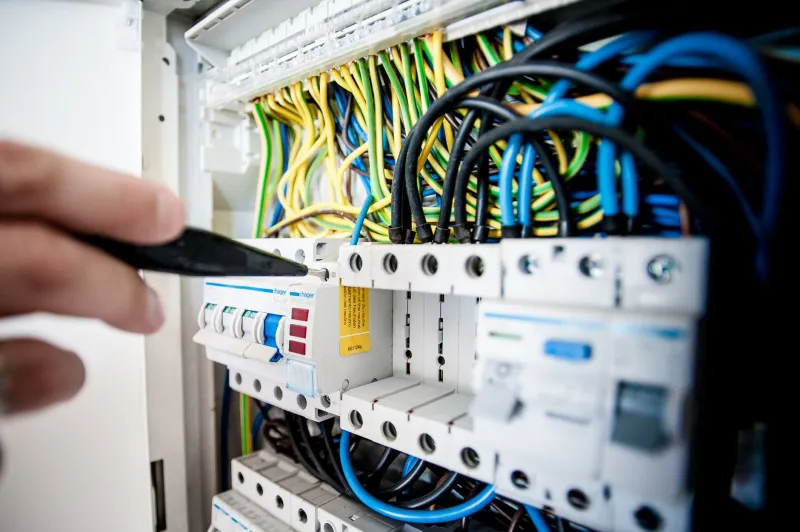
Of all the failure modes that maintenance engineers encounter in industrial electrical installations, thermal creep is among the most insidious. Unlike a mechanical impact that cracks a fitting on contact, or a chemical spill that visibly attacks a seal, the damage caused by repeated temperature cycling accumulates invisibly—across dozens, hundreds, even thousands of thermal cycles—until the seal can no longer perform its function. By that point, the facility may already be facing moisture ingress, contamination pathways, or in hazardous-area installations, a compromised explosion-proof barrier.
For US facilities operating near industrial furnaces, in outdoor enclosures exposed to seasonal temperature swings from sub-zero winters to summer heat, or in manufacturing environments where process heat fluctuates dramatically between shifts, thermal creep is not a theoretical concern. It is an active, ongoing degradation process that deserves systematic attention.
The Physics of Thermal Stress in Cable Gland Assemblies
Every material in a cable gland assembly—the gland body, the sealing insert, the cable jacket, and the locknut—expands when heated and contracts when cooled. The problem is that these components do not expand and contract at the same rate. A nylon gland body, a neoprene seal, and a thermoplastic cable jacket each carry a distinct coefficient of thermal expansion (CTE). When the assembly heats up, each element attempts to grow at its own pace. When it cools, each element retreats at its own pace.
Over a single cycle, the dimensional mismatch is negligible. Over a season, or a year of daily production cycles, the cumulative effect is material fatigue at the contact interfaces. The sealing insert—which relies on consistent compressive force against the cable jacket to maintain its IP rating—gradually loses that contact pressure. Engineers call this relaxation. The industry term for the broader phenomenon is thermal creep: the slow, plastic deformation of a material under sustained or cyclically applied stress, even when that stress falls well below the material's rated tensile strength.
The result is a seal that appears intact on visual inspection but has lost meaningful compressive engagement with the cable jacket. It passes a casual walk-through. It fails a pressure or ingress test.
Environments Where Thermal Creep Is Most Prevalent
Certain facility profiles are disproportionately vulnerable to this failure mode. Outdoor electrical enclosures in northern states—Minnesota, Michigan, Wisconsin, the Dakotas—routinely cycle between temperatures below 0°F in January and above 90°F in July. That represents a thermal delta of 90 degrees or more across a single year, applied repeatedly to every gland in every outdoor panel.
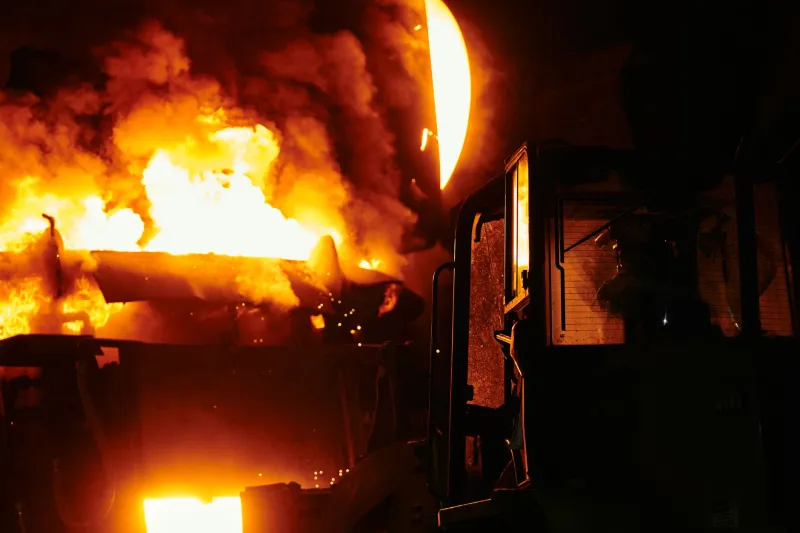
Indoor environments present their own challenges. Facilities with industrial ovens, kilns, or casting operations often create localized thermal zones where cable management hardware experiences temperatures far exceeding ambient plant conditions. A gland installed near a furnace exhaust channel may cycle between ambient and elevated temperatures multiple times per shift. Petrochemical plants, steel mills, and foundries in the American Midwest and Gulf Coast are particularly susceptible.
Even facilities that appear thermally stable—climate-controlled assembly plants, for instance—can experience thermal cycling in cable penetrations that pass through exterior walls, where one face of the installation sees conditioned interior air and the other faces ambient outdoor conditions.
Field Indicators That Thermal Creep Is Already Underway
Because thermal creep does not produce dramatic visible symptoms in its early stages, maintenance teams must know what subtle signs to look for during routine inspections.
Cable movement within the gland body is one of the clearest indicators. A properly torqued gland should hold the cable firmly against axial pull. If a technician can move the cable longitudinally within the gland with modest hand pressure, the sealing insert has already relaxed. This is a direct sign of lost compressive force.
Micro-gaps at the cable entry point are visible under close inspection, particularly with a flashlight in low-ambient-light conditions. A seal that once conformed tightly to the cable jacket will show a hairline separation as creep progresses. In dusty environments, particulate accumulation at this gap is a reliable secondary indicator.
Seal discoloration or surface crazing on elastomeric inserts—particularly those made from EPDM or standard neoprene—can signal thermal degradation. A seal that has experienced repeated thermal stress beyond its rated range will show surface cracking or a matte, chalky appearance that differs from the original finish.
Recurring moisture or contamination inside enclosures that cannot be attributed to a specific ingress event often traces back to seal failure at cable entries. If a panel is found with condensation or dust infiltration after a seasonal temperature transition, compromised gland seals should be among the first items investigated.
Material Selection as a Preventive Strategy
Addressing thermal creep begins at the specification stage. The selection of gland body material and sealing insert compound should account explicitly for the expected thermal range and cycling frequency of the installation environment.
For high-cycling applications, silicone elastomer seals offer a meaningful advantage over standard neoprene or PVC alternatives. Silicone maintains its elastic properties across a wider temperature range—typically from -65°F to 390°F—and exhibits lower permanent set after compression, meaning it retains more of its original geometry after repeated deformation cycles.
Nickel-plated brass or 316 stainless steel gland bodies are preferable in environments with high thermal deltas. Thermoplastic bodies, while suitable for many applications, carry higher CTEs than metallic alternatives and can contribute more substantially to the dimensional mismatch that drives creep at the seal interface.
For cable jackets specifically, cross-linked polyethylene (XLPE) and thermoplastic elastomer (TPE) compounds offer better dimensional stability under thermal cycling than standard PVC, which softens noticeably at elevated temperatures and can permanently deform under the compressive force of the gland seal.
Installation Practices That Reduce Thermal Stress
Beyond material selection, installation technique plays a significant role in how well a cable gland assembly resists thermal creep over its service life.
Torque management is critical. Both under-torquing and over-torquing a gland create vulnerability. Under-torqued glands lack sufficient initial compressive force to maintain seal engagement as the assembly relaxes. Over-torqued glands pre-stress the sealing insert, accelerating fatigue and reducing the number of thermal cycles the seal can withstand before failure.
Expansion loops in cable runs approaching gland entries allow the cable itself to accommodate thermal movement without transmitting axial force into the gland body. Where cables are routed in straight runs directly to enclosure entries, thermal expansion has nowhere to go except into the gland assembly.
Periodic re-torquing schedules, particularly following the first full seasonal cycle after installation, can compensate for initial relaxation in new assemblies. Facilities in regions with significant seasonal temperature variation should incorporate a spring and fall gland inspection into their preventive maintenance calendar.
Building a Thermal Creep Inspection Protocol
For facilities that have not previously treated thermal creep as a discrete failure mode, establishing a targeted inspection protocol is a practical first step. The protocol should identify all cable gland installations in thermally dynamic zones—near heat sources, in outdoor enclosures, in penetrations through exterior walls—and assign inspection intervals proportional to the thermal stress those locations experience.
Inspections should include a physical pull test on accessible cables, a visual examination of seal surfaces and cable entry points, and a review of enclosure interiors for moisture or contamination evidence. Any gland showing signs of creep should be scheduled for replacement rather than re-torquing alone, as a seal that has already experienced significant relaxation will continue to degrade more rapidly through subsequent cycles.
Thermal creep will never announce itself loudly. But for facilities willing to look carefully, the signs are there—and addressing them before they progress to seal failure is far less costly than the alternative.