Dead Stock, Live Losses: How Poor Cable Gland Inventory Practices Are Draining Your Facility's Budget
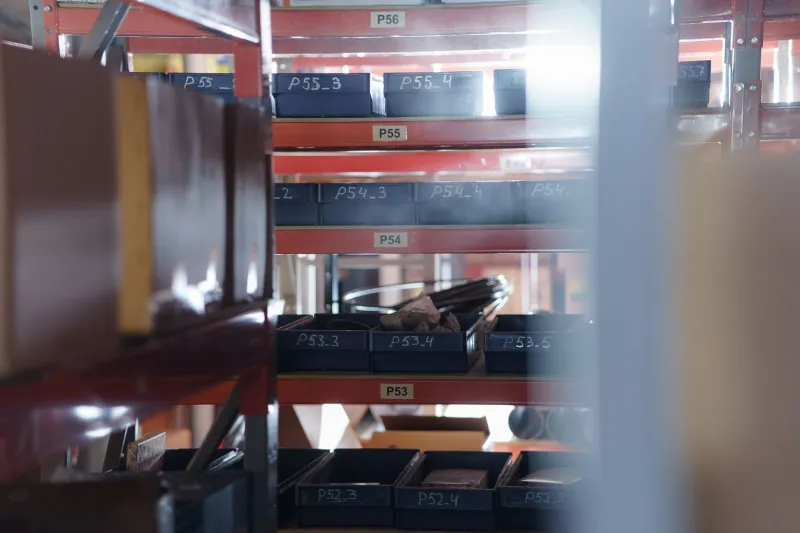
In most industrial facilities, cable glands occupy a peculiar position in the operational hierarchy. They are essential enough to halt a production line when unavailable, yet considered routine enough that their inventory management rarely receives serious scrutiny. The result of this neglect is predictable: shelves stocked with redundant components, serviceable glands discarded in favor of emergency replacements, and procurement teams ordering parts that already exist somewhere in the storeroom.
The financial consequences are rarely visible on a single line item. Instead, they accumulate quietly across purchase orders, disposal records, and emergency freight charges — a diffuse form of waste that few facilities have the systems in place to detect, let alone quantify.
The Anatomy of a Disorganized Inventory
Cable gland inventories fail for a combination of structural and behavioral reasons. On the structural side, many US facilities still maintain parts catalogs that were established during initial plant construction and never meaningfully updated. As equipment evolves, new gland specifications enter the storeroom without corresponding catalog entries. Older entries remain active even after the equipment they served has been decommissioned.
Over time, the catalog diverges from physical reality. Technicians searching for a specific metric-entry brass gland with a particular IP rating may find no catalog record — not because the part is absent, but because it was received under an outdated vendor part number or cataloged under a different description entirely. The instinctive response is to place a new purchase order, compounding the surplus.
On the behavioral side, decentralized purchasing compounds the problem. In larger facilities, maintenance supervisors, procurement coordinators, and department leads may all have independent authority to order glands. Without a unified view of current stock, each decision-maker operates on incomplete information. The same component gets ordered from three different vendors by three different people within the same fiscal quarter.
What Premature Disposal Actually Costs
One of the least-examined sources of cable gland waste is the disposal of components that remain fully serviceable. This occurs most frequently during equipment upgrades or partial line reconfigurations, when glands removed from decommissioned panels are treated as scrap rather than recoverable stock.
A cable gland in good physical condition — undamaged threads, intact sealing insert, no signs of chemical degradation — retains its full functional value regardless of where it was previously installed. Yet in many facilities, removed glands are binned with general electrical waste simply because no process exists to evaluate and return them to inventory.
The unit cost of an individual gland may seem modest. But when a facility discards dozens of serviceable components per quarter across multiple maintenance events, the cumulative replacement cost over a fiscal year can reach figures that would justify a dedicated inventory review process several times over. Add the freight premiums associated with urgent reorders — particularly for specialty or hazardous-location-rated glands — and the economic case for better inventory hygiene becomes difficult to dismiss.
Common Cataloging Failures in US Industrial Facilities
Several cataloging failures appear with particular frequency in American manufacturing and processing environments.
Inconsistent nomenclature. Cable glands may be recorded under manufacturer trade names, internal part numbers, legacy vendor codes, or informal shop-floor descriptions — sometimes all four, for the same component. Without a standardized naming convention tied to core specifications (entry thread type, cable diameter range, material, IP rating, hazardous-location certification where applicable), cross-referencing becomes unreliable.
Missing specification depth. Many inventory records capture only the most basic identifiers — a part number and a quantity. Critical attributes such as armoring type compatibility, temperature rating, and approval certifications are absent. When a technician needs a gland for an explosion-proof enclosure in a Class I, Division 2 area, a catalog entry that omits certification data is functionally useless for compliance purposes, even if the physical part would qualify.
No lifecycle tracking. Inventory systems that record only inbound receipts and outbound issues provide no visibility into how long components have been in storage. Cable glands with elastomeric seals have a finite shelf life, particularly in environments with temperature fluctuation or chemical vapor exposure. Without age tracking, facilities risk installing degraded sealing elements — a safety concern that also generates downstream maintenance costs.
Phantom stock entries. Inventory records that show positive quantities for components that no longer physically exist — consumed without proper issue records, lost to informal borrowing, or miscounted during receiving — lead procurement teams to trust counts that do not reflect reality.
A Practical Audit Framework
Reclaiming control of cable gland inventory does not require a wholesale systems overhaul. A targeted audit conducted in phases can produce meaningful results within a single quarter.
Phase 1: Physical reconciliation. Conduct a complete physical count of all cable glands in storage, organized by location. Cross-reference physical quantities against current inventory records. Document all discrepancies, both overages and shortfalls, and flag entries where the physical component cannot be matched to any catalog record.
Phase 2: Specification standardization. Establish a master attribute set for all cable gland records: entry thread standard and size, compatible cable outer diameter range, material designation, IP rating, armoring compatibility, certifications held, and date received. Update existing records to conform to this standard. Assign consistent internal nomenclature that allows equivalent components from different vendors to be cross-referenced.
Phase 3: Condition and age assessment. For all glands that have been in storage beyond manufacturer-recommended shelf life guidelines — or for which no receipt date is recorded — conduct a physical inspection. Components showing seal degradation, thread damage, or corrosion should be removed from serviceable inventory. Those in acceptable condition should be flagged with inspection dates and prioritized for earliest use.
Phase 4: Decommissioned equipment recovery. Establish a formal process for evaluating glands removed during maintenance or equipment retirement. Assign responsibility for inspection, cleaning, and catalog entry to a specific role. Components that pass inspection should be returned to serviceable stock with full attribute documentation.
Phase 5: Procurement controls. Implement a minimum-information requirement for cable gland purchase orders that includes the standardized internal part number, current on-hand quantity at time of order, and the specific application driving the request. This single measure, applied consistently, eliminates a significant share of duplicate ordering.
The Larger Operational Argument
Effective cable gland inventory management is not merely a cost-reduction exercise. It supports broader operational goals: faster maintenance response times, consistent compliance documentation, and reduced exposure to the supply disruptions that have periodically affected specialty industrial components in recent years.
A facility that knows precisely what glands it holds, where they are located, what specifications they meet, and how long they have been in storage is a facility that can respond to a line-down situation with confidence rather than improvisation. That operational certainty has value that extends well beyond the purchase price of any individual component.
The cable gland graveyard — that accumulation of misidentified, misplaced, and prematurely discarded components — is not an inevitable feature of industrial operations. It is a symptom of systems that have not kept pace with the complexity of the facilities they support. The remedy is methodical, achievable, and overdue.