Surviving the Washdown: Specifying Cable Glands for Food and Beverage Environments
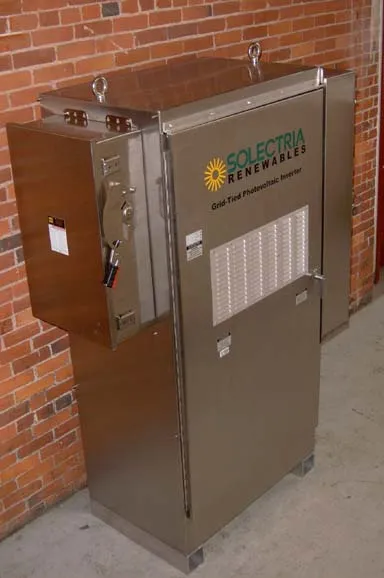
Photo: Solectria, CC BY-SA 4.0, via Wikimedia Commons
American food and beverage manufacturers operate under a paradox that electrical engineers and maintenance teams understand all too well: the very procedures that keep a facility sanitary and compliant with FDA and USDA regulations are the same procedures that relentlessly attack electrical infrastructure. High-pressure washdowns, caustic cleaning foams, chlorine-based sanitizers, and the persistent humidity that lingers after every cleaning cycle combine to create an environment that few industrial components can withstand without deliberate engineering choices made at the specification stage.
Cable glands are among the most vulnerable components in this equation. They sit at the interface between the protected interior of an enclosure and the hostile plant floor environment, and they must maintain that seal across hundreds or thousands of cleaning cycles over years of service. Selecting the wrong gland material or ingress protection rating does not merely invite nuisance failures — it invites contamination of electrical enclosures, accelerated corrosion of connected equipment, and, in worst-case scenarios, production shutdowns that cost far more than the correct gland ever would have.
Understanding What the Environment Actually Demands
Before comparing materials, it is worth being precise about what food and beverage plants actually throw at their electrical components. Washdown pressures in meat processing facilities frequently exceed 1,500 PSI. Dairy plants rely on caustic soda (sodium hydroxide) at elevated temperatures for clean-in-place cycles. Beverage bottling lines may use peracetic acid as a sanitizer, which is highly oxidizing. Seafood processing facilities introduce salt-laden mists that settle on every surface. Fruit and vegetable washing operations combine organic acids with high humidity around the clock.
Each of these conditions attacks gland materials differently. Chlorine compounds accelerate stress corrosion cracking in standard brass. Peracetic acid attacks nickel plating at the microscopic level. Salt spray initiates galvanic corrosion wherever dissimilar metals meet. Sodium hydroxide at elevated temperatures can degrade certain elastomers, compromising the sealing element that is ultimately responsible for keeping moisture and contaminants out of the enclosure.
The practical consequence is that a gland performing acceptably in a dry manufacturing environment may fail catastrophically in a food processing context within a single production quarter.
Stainless Steel: The Benchmark for Demanding Applications
For the most aggressive environments — meat processing, seafood handling, high-frequency washdown areas — 316L stainless steel cable glands represent the industry benchmark. The molybdenum content in 316L provides substantially better resistance to chloride-induced pitting corrosion compared to 304 stainless, a distinction that matters enormously in facilities where chlorine-based sanitizers are routine.
Stainless steel glands carry a higher unit cost than brass alternatives, often by a factor of three to five. However, the relevant comparison is not unit price — it is installed lifetime cost. A case study from a Midwest beef processing facility illustrates the calculation clearly. The facility had specified nickel-plated brass glands throughout its chilling and packaging area as a cost-saving measure during a capital expansion. Within 18 months, corrosion-related seal failures required replacement of roughly 40 percent of those glands, along with inspection and cleaning of the enclosures they served. When labor, replacement components, and one partial production interruption were factored in, the total remediation cost exceeded what 316L stainless glands would have cost for the entire installation by a significant margin.
Stainless glands also support hygienic design principles increasingly required by food safety auditors. Their smooth, crevice-minimizing external profiles reduce locations where bacteria and organic material can accumulate — a consideration that goes beyond electrical performance.
Nickel-Plated Brass: A Conditional Choice
Nickel-plated brass occupies the middle ground in food and beverage specifications, and it is a material that rewards careful application rather than blanket adoption or rejection. In environments where cleaning agents are mild, humidity is moderate, and washdown pressures are low, nickel-plated brass can provide adequate service at a cost point below stainless steel.
The critical caveat is plating integrity. The moment the nickel plating is scratched, abraded, or chemically compromised, the underlying brass is exposed to an environment it was not designed to resist. Facilities with high-traffic areas around electrical enclosures, or those using abrasive cleaning methods, frequently discover that plating damage is more common than anticipated during initial specification.
Nickel-plated brass is most defensible in secondary or tertiary processing areas where washdown frequency is lower and chemical concentrations are diluted. It should not be specified as a cost-reduction measure in primary processing zones where the environmental argument for stainless steel is clear.
Polymer Glands: Corrosion Immunity With Engineering Trade-offs
Polyamide (nylon) and polypropylene cable glands offer genuine immunity to the corrosion mechanisms that challenge metallic options. They will not rust, pit, or suffer galvanic attack regardless of the chemical environment. For many food and beverage applications, this is a compelling property.
However, polymer glands introduce different engineering constraints. Their mechanical strength is lower than metal alternatives, making them less suitable for applications involving heavy cables, significant pull forces, or physical impact risk. Certain polymer grades are susceptible to UV degradation in facilities with skylights or outdoor secondary areas. Temperature resistance varies by polymer type and must be verified against the facility's cleaning temperature profiles — a polypropylene gland rated for standard temperatures may not perform adequately in a high-temperature CIP environment.
Where polymer glands excel is in environments where chemical aggression is the dominant concern, mechanical loads are modest, and budget constraints are real. Secondary packaging areas, control panels in low-risk zones, and sensor installations in beverage filling areas are all contexts where well-specified polymer glands represent sound engineering.
Ingress Protection Ratings and Sealing Element Selection
Material selection addresses corrosion resistance, but ingress protection — the IP rating system — governs whether a gland actually keeps water and contaminants out of the enclosure it serves. For food and beverage applications, IP66 is generally considered the minimum acceptable rating for areas subject to direct washdown. IP67 and IP69K are warranted in the most aggressive zones, with IP69K specifically addressing high-pressure, high-temperature water jets.
Equally important is the sealing element — the elastomeric insert that creates the actual seal around the cable jacket. EPDM (ethylene propylene diene monomer) rubber provides excellent resistance to steam, hot water, and many cleaning chemicals, making it a strong default choice. Silicone seals offer broader temperature range performance but may be less resistant to specific petroleum-based compounds used in some facilities. Specifying the wrong elastomer can result in swelling, hardening, or chemical attack of the seal regardless of how well the body material was chosen.
Building a Specification Framework
For maintenance managers and electrical engineers working through a specification process, the practical approach is to map the facility by zone before selecting gland types. Zone classification should account for washdown frequency, chemical types and concentrations, pressure levels, humidity exposure, and temperature ranges. This zonal map then drives material selection — stainless steel where conditions are most demanding, polymer or nickel-plated brass where they are demonstrably milder.
Documenting these decisions and their rationale creates institutional knowledge that survives personnel changes and supports future capital projects. The food and beverage industry's regulatory environment, combined with the financial consequences of unplanned downtime, makes that documentation a practical asset rather than a bureaucratic exercise.
Proper specification at the front end of a project is not a premium — it is the most cost-effective decision an engineer can make when the alternative is a remediation cycle measured in tens of thousands of dollars.